Traditional Chinese and tone-marked pinyin stay visible. Open each section when you want the English translation. Classical quotations are translated for meaning.
01
你今天晚上,是幾點關燈的?
nǐ jīntiān wǎnshàng, shì jǐ diǎn guān dēng de?
English translation
What time did you turn off the light tonight?
02
你可能要想一下。因為對我們來說,燈是想開就開、想關就關的東西。天黑不黑,跟我們要不要睡,已經沒有什麼關係了。
nǐ kěnéng yào xiǎng yīxià. yīnwèi duì wǒmen lái shuō, dēng shì xiǎng kāi jiù kāi, xiǎng guān jiù guān de dōngxi. tiān hēi bù hēi, gēn wǒmen yào bù yào shuì, yǐjīng méiyǒu shénme guānxì le.
English translation
You may have to think about it. For us, a light is something we can switch on or off whenever we want. Whether it is dark no longer has much to do with whether we sleep.
03
可是在沒有電的年代,太陽一下山,世界就真的暗了。想在晚上多做一件事,就要多燒一點東西。光,是要花錢買的。
kěshì zài méiyǒu diàn de niándài, tàiyáng yīxià shān, shìjiè jiù zhēn de àn le. xiǎng zài wǎnshàng duō zuò yī jiàn shì, jiù yào duō shāo yī diǎn dōngxi. guāng, shì yào huāqián mǎi de.
English translation
But before electricity, the world truly became dark as soon as the sun set. Doing one more thing at night meant burning more fuel. Light cost money.
04
這一集,我們只講一件事:沒有電燈的夜晚,古人是怎麼過的。每一段,我一樣會告訴你是哪一本書寫的。
zhè yī jí, wǒmen zhǐ jiǎng yī jiàn shì: méiyǒu diàndēng de yè wǎn, gǔrén shì zěnme guò de. měi yī duàn, wǒ yīyàng huì gàosu nǐ shì nǎ yī běn shū xiě de.
English translation
This episode asks one question: how did people in the past spend nights without electric lights? As always, I will tell you which book each passage comes from.
05
先從一個問句開始。
xiān cóng yī ge wènjù kāishǐ.
English translation
Let us begin with a question.
06
《詩經》的〈小雅〉裡,有一首詩叫〈庭燎〉。它的第一句,是一個人在半夜問的話:
Shījīng de Xiǎoyǎ lǐ, yǒu yī shǒu shī jiào Tíngliáo. tā de dì-yī jù, shì yī ge rén zài bànyè wèn de huà:
English translation
In the 'Minor Odes' section of the Book of Songs is a poem called 'The Courtyard Torch.' Its first line is a question asked at midnight:
07
「夜如何其?夜未央。」
yè rú hé jī? yè wèi yāng.
English translation
Free rendering: 'How far has the night gone? It has not yet reached its midpoint.'
08
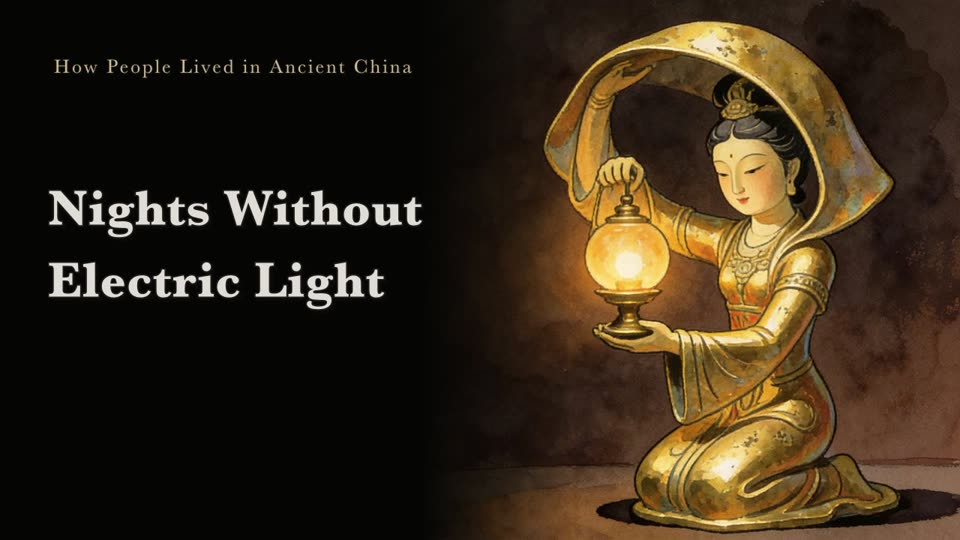
現在是夜裡什麼時候了?夜還沒有過一半。
xiànzài shì yè lǐ shénme shíhou le? yè hái méiyǒu guò yī bàn.
English translation
What time is it in the night? The night is not yet half over.
09
下一句是:
xià yī jù shì:
English translation
The next line says:
10
「庭燎之光。」
tíngliáo zhī guāng.
English translation
Free rendering: 'The courtyard torch shines.'
11
庭燎,就是在庭院裡點起來的大火把。
tíngliáo, jiù shì zài tíngyuàn lǐ diǎn qǐlái de dà huǒbǎ.
English translation
A courtyard torch was a large firebrand lit in a courtyard.
12
這首詩一共三段,每一段都用同一句話開頭:夜如何其?第一段答,夜未央,夜還沒過半。第二段答,夜未艾,夜還沒有盡。第三段答,夜鄉晨,夜已經靠近早晨了。
zhè shǒu shī yīgòng sān duàn, měi yī duàn dōu yòng tóng yī jù huà kāitóu: yè rú hé jī? dì-yī duàn dá, yè wèi yāng, yè hái méi guò bàn. dì-èr duàn dá, yè wèi ài, yè hái méiyǒu jǐn. dì-sān duàn dá, yè xiàng chén, yè yǐjīng kào jìn zǎochén le.
English translation
The poem has three stanzas, each beginning with the same question: 'How far has the night gone?' The answers say that it is not yet halfway through, not yet ending, and finally nearing dawn.
13
你有沒有發現,這個人一整個晚上都沒有睡好。他一直醒來,一直問:現在什麼時候了?
nǐ yǒu méiyǒu fāxiàn, zhège rén yī zhěng ge wǎnshàng dōu méiyǒu shuìhǎo. tā yīzhí xǐnglái, yīzhí wèn: xiànzài shénme shíhou le?
English translation
Did you notice that this person slept badly all night? He kept waking and asking what time it was.
14
而他每一次往外看,看到的都是院子裡那一團火。火從很亮,燒到快要熄了,天也就快亮了。
ér tā měi yī cì wǎngwài kàn, kàndào de dōu shì yuàn zi lǐ nà yī tuán huǒ. huǒ cóng hěn liàng, shāo dào kuàiyào xī le, tiān yě jiù kuài liàng le.
English translation
Each time he looked outside, he saw the fire in the courtyard. It burned from bright to nearly extinguished, and then dawn was close.
15
在那個年代,要照亮一個晚上,靠的是一堆一直有人顧著的火。這不是一般人家燒得起的。
zài nàge niándài, yào zhào liàng yī ge wǎnshàng, kào de shì yī duī yīzhí yǒu rén gùzhe de huǒ. zhè bù shì yībān rénjiā shāode qǐ de.
English translation
In those days, lighting an entire night required a fire that someone constantly tended. Ordinary households could not afford that.
16
那一般人呢?一般人家,天黑了就是睡覺。可是有一種人不甘心,就是想讀書的人。
nà yībān rén ne? yībān rénjiā, tiān hēi le jiù shì shuì jué. kěshì yǒu yī zhǒng rén bù gānxīn, jiù shì xiǎng dúshū de rén.
English translation
What about ordinary people? They went to sleep when darkness fell. But some people refused to give up: those who wanted to study.
17
漢朝有一個人叫匡衡。《西京雜記》裡寫他:
Hàncháo yǒu yī ge rén jiào Kuāng Héng. Xījīng Zájì lǐ xiě tā:
English translation
In the Han dynasty there was a man named Kuang Heng. Miscellaneous Records of the Western Capital says of him:
18
「勤學而無燭。」
qín xué ér wú zhú.
English translation
Free rendering: 'He studied diligently but had no candle.'
19
很用功,可是家裡沒有蠟燭。
hěn yònggōng, kěshì jiā lǐ méiyǒu làzhú.
English translation
He worked very hard, but his family had no candles.
20
他的鄰居有。可是鄰居的光,照不到他家。書上接著寫:
tā de línjū yǒu. kěshì línjū de guāng, zhào bù dào tā jiā. shū shàng jiēzhe xiě:
English translation
His neighbor had candles, but their light did not reach his home. The book continues:
21
「衡乃穿壁引其光,以書映光而讀之。」
Héng nǎi chuānbì yǐn qí guāng, yǐ shū yìng guāng ér dú zhī.
English translation
Free rendering: 'Heng pierced the wall to draw in the light, then held his book in it and read.'
22
他就在牆上鑿了一個洞,讓隔壁的光透過來,把書湊到那一點光底下讀。
tā jiù zài qiáng shàng záo le yī ge dòng, ràng gébì de guāng tòu guò lái, bǎ shū còu dào nà yī diǎn guāng dǐ xià dú.
English translation
He cut a hole in the wall, let the neighbor's light pass through, and held his book under that small patch of light to read.
23
這就是「鑿壁偷光」這四個字的來源。
zhè jiù shì záobì-tōuguāng zhè sì ge zì de láiyuán.
English translation
This is the origin of the four-character phrase 'boring through a wall to borrow light.'
24
到了晉朝,還有一個人叫車胤。《晉書》裡寫他:
dào le Jìncháo, hái yǒu yī ge rén jiào Chē Yìn. Jìnshū lǐ xiě tā:
English translation
In the Jin dynasty there was another man, Che Yin. The Book of Jin says of him:
25
「家貧不常得油。」
jiā pín bù cháng dé yóu.
English translation
Free rendering: 'His family was poor and often could not obtain lamp oil.'
26
家裡窮,常常買不起燈油。
jiā lǐ qióng, cháng cháng mǎibuqǐ dēngyóu.
English translation
His family was poor and often could not afford lamp oil.
27
那怎麼辦?書上寫:
nà zěnme bàn? shū shàng xiě:
English translation
So what did he do? The book says:
28
「夏月則練囊盛數十螢火以照書,以夜繼日焉。」
xià yuè zé liàn náng chéng shù shí yíng huǒ yǐ zhào shū, yǐ yè jì rì yān.
English translation
Free rendering: 'In summer he put dozens of fireflies in a white-silk bag to illuminate his books, continuing his studies from day into night.'
29
夏天的時候,他用白色的絹做一個袋子,裝幾十隻螢火蟲,拿來照書。白天讀不完的,晚上接著讀。
xià tiān de shíhou, tā yòng bái sè de juàn zuò yī ge dàizi, zhuāng jǐ shí zhī yínghuǒchóng, ná lái zhào shū. báitiān dú bù wán de, wǎnshàng jiēzhe dú.
English translation
In summer, he made a bag from white silk, filled it with dozens of fireflies, and used their glow to read. What he could not finish by day, he continued at night.
30
這兩個故事,我們從小聽到大,聽的都是他們有多用功。可是換一個角度看,它們說的其實是同一件事:在那個年代,晚上的一點光,是很貴的。貴到一個想讀書的窮孩子,要去鑿牆,要去抓蟲。
zhè liǎng ge gùshì, wǒmen cóng xiǎo tīng dào dà, tīng de dōu shì tāmen yǒu duō yònggōng. kěshì huàn yī ge jiǎodù kàn, tāmen shuō de qíshí shì tóng yī jiàn shì: zài nàge niándài, wǎnshàng de yī diǎn guāng, shì hěn guì de. guì dào yī ge xiǎng dúshū de qióng háizi, yào qù záo qiáng, yào qù zhuā chóng.
English translation
We have heard these two stories since childhood as examples of diligence. From another angle, both say the same thing: a little light at night was so expensive that a poor child who wanted to study had to cut through a wall or catch insects.
31
蠟燭貴到什麼程度?唐朝有一首詩,可以讓我們看到一點。
làzhú guì dào shénme chéng dù? tángcháo yǒu yī shǒu shī, kěyǐ ràng wǒmen kàndào yī diǎn.
English translation
How expensive were candles? A Tang-dynasty poem gives us a glimpse.
32
詩人韓翃寫過一首〈寒食〉。寒食這一天,照習俗家家戶戶都不生火。到了傍晚,詩裡寫:
shīrén Hán Hóng xiě guò yī shǒu Hánshí. Hánshí zhè yī tiān, zhào xísú jiājiā-hùhù dōu bù shēng huǒ. dào le bàngwǎn, shī lǐ xiě:
English translation
The poet Han Hong wrote 'Cold Food Festival.' By custom, households did not light fires that day. At dusk, the poem says:
33
「日暮漢宮傳蠟燭,輕煙散入五侯家。」
rì mù Hàngōng chuán làzhú, qīng yān sàn rù wǔ hóu jiā.
English translation
Free rendering: 'At sunset the palace passes out candles; wisps of smoke drift into the homes of the five lords.'
34
天黑了,宮裡把點著的蠟燭一支一支傳出來。那一縷輕輕的煙,飄進去的,是王侯貴族的家。
tiān hēi le, gōng lǐ bǎ diǎnzhe de làzhú yī zhī yī zhī chuán chū lái. nà yī lǚ qīng qīng de yān, piāo jìn qù de, shì wánghóu guìzú de jiā.
English translation
After dark, lit candles were passed out from the palace one by one. Their thin smoke drifted into the homes of princes and nobles.
35
詩裡說的是漢宮,寫的其實是他自己那個時代。全城都還暗著的時候,最先亮起來的,是有權有勢的人家。一支蠟燭,在這首詩裡,是一種賞賜。
shī lǐ shuō de shì Hàngōng, xiě de qíshí shì tā zìjǐ nàge shídài. quán chéng dōu hái ànzhe de shíhou, zuì xiān liàng qǐlái de, shì yǒu quán yǒu shì de rénjiā. yī zhī làzhú, zài zhè shǒu shī lǐ, shì yī zhǒng shǎng cì.
English translation
The poem names the Han palace but describes the poet's own era. While the whole city remained dark, the homes of the powerful lit up first. In this poem, a candle was a reward.
36
那有錢人家的燈,長什麼樣子?
nà yǒuqián rénjiā de dēng, zhǎng shénme yàngzi?
English translation
What did lamps in wealthy homes look like?
37
一九六八年,河北滿城的一座西漢墓裡,出土了一盞銅燈。因為上面刻著「長信」這兩個字,後來的人叫它長信宮燈。
yī-jiǔ-liù-bā nián, Héběi Mǎnchéng de yī zuò Xīhàn mù lǐ, chūtǔ le yī zhǎn tóngdēng. yīnwèi shàngmiàn kèzhe Chángxìn zhè liǎng ge zì, hòulái de rén jiào tā Chángxìn Gōngdēng.
English translation
In 1968, a bronze lamp was excavated from a Western Han tomb at Mancheng, Hebei. Because it bears the characters 'Changxin,' it became known as the Changxin Palace Lamp.
38
它的樣子,是一個跪坐著的宮女。她左手托著燈,右手抬起來,袖子垂下來,剛好罩在燈的上面。
tā de yàngzi, shì yī ge guìzuòzhe de gōngnǚ. tā zuǒshǒu tuōzhe dēng, yòushǒu tái qǐlái, xiùzi chuí xià lái, gāng hǎo zhào zài dēng de shàngmiàn.
English translation
It is shaped like a kneeling palace maid. She supports the lamp with her left hand and raises her right arm; her hanging sleeve forms a hood over the lamp.
39
這個袖子不只是好看。它是空心的。燈點起來的時候,煙會順著袖子往上走,進到宮女的身體裡面,不會飄得滿屋子都是。
zhège xiùzi bù zhǐ shì hǎo kàn. tā shì kōngxīn de. dēng diǎn qǐlái de shíhou, yān huì shùnzhe xiùzi wǎng shàng zǒu, jìn dào gōngnǚ de shēntǐ lǐmiàn, bù huì piāode mǎn wūzi dōu shì.
English translation
The sleeve is not merely decorative. It is hollow. When the lamp burns, smoke travels up the sleeve into the maid's body instead of filling the room.
40
燈的外面還有兩片可以推動的銅片。往左推、往右推,光就照向不同的方向,開大一點、關小一點,亮度也跟著變。
dēng de wàimiàn hái yǒu liǎng piàn kěyǐ tuīdòng de tóngpiàn. wǎng zuǒ tuī, wǎng yòu tuī, guāng jiù zhào xiàng bùtóng de fāngxiàng, kāi dà yī diǎn, guān xiǎo yī diǎn, liàngdù yě gēnzhe biàn.
English translation
Outside the lamp are two movable bronze panels. Sliding them left or right directs the light; opening or closing them also changes its brightness.
41
兩千多年前的一盞燈,可以調方向,可以調亮度,還會把自己的煙收起來。你現在書桌上那一盞,做的也差不多就是這些事。
liǎngqiān duō nián qián de yī zhǎn dēng, kěyǐ tiáo fāngxiàng, kěyǐ tiáo liàngdù, hái huì bǎ zìjǐ de yān shōu qǐlái. nǐ xiànzài shūzhuō shàng nà yī zhǎn, zuò de yě chàbuduō jiù shì zhèxiē shì.
English translation
A lamp made more than two thousand years ago could direct light, adjust brightness, and contain its own smoke. The lamp on your desk performs much the same tasks.
42
有了蠟燭,還要有人照顧它。
yǒu le làzhú, hái yào yǒu rén zhàogù tā.
English translation
Even with candles, someone still had to tend them.
43
李商隱有一首很有名的詩,〈夜雨寄北〉。裡面有一句:
Lǐ Shāngyǐn yǒu yī shǒu hěn yǒumíng de shī, Yèyǔ Jì Běi. lǐmiàn yǒu yī jù:
English translation
Li Shangyin wrote a famous poem, 'Night Rain Sent North.' One line says:
44
「何當共剪西窗燭,卻話巴山夜雨時。」
hé dāng gòng jiǎn xī chuāng zhú, què huà bā shān yèyǔ shí.
English translation
Free rendering: 'When shall we trim the candle together by the western window and talk again of this rainy night in the Ba Mountains?'
45
什麼時候,我們才能一起坐在西邊的窗下,剪著燭花,再聊起今晚巴山的這場雨。
shénme shíhou, wǒmen cái néng yīqǐ zuò zài xī biān de chuāng xià, jiǎnzhe zhú huā, zài liáo qǐ jīn wǎn bā shān de zhè chǎng yǔ.
English translation
When will we sit together by the western window, trim the candlewick, and talk about tonight's rain in the Ba Mountains?
46
剪燭,是什麼意思?古時候的蠟燭,燭芯燒久了會變長、會結成一團,火就變暗,還會冒煙。所以要有人拿剪刀,把燒焦的那一段剪掉,光才會重新亮起來。
jiǎn zhú, shì shénme yìsi? gǔ shíhou de làzhú, zhúxīn shāo jiǔ le huì biàn cháng, huì jiéchéng yī tuán, huǒ jiù biàn àn, hái huì mào yān. suǒyǐ yào yǒu rén ná jiǎndāo, bǎ shāojiāo de nà yī duàn jiǎn diào, guāng cái huì chóngxīn liàng qǐlái.
English translation
What does 'trimming the candle' mean? As an old candle burned, its wick grew long and formed a lump, dimming the flame and making smoke. Someone had to cut off the charred part so the light would brighten again.
47
也就是說,兩個人要聊到蠟燭需要剪,那是聊了很久很久。這一句詩裡的想念,是用一支蠟燭的時間來算的。
yě jiù shì shuō, liǎng ge rén yào liáo dào làzhú xū yào jiǎn, nà shì liáo le hěn jiǔ hěn jiǔ. zhè yī jù shī lǐ de xiǎng niàn, shì yòng yī zhī làzhú de shíjiān lái suàn de.
English translation
If two people talked long enough for the candle to need trimming, they had talked for a very long time. The longing in this line is measured by the burning time of a candle.
48
可是就算有了燈,古時候的夜晚,還有一道門。
kěshì jiù suàn yǒu le dēng, gǔ shíhou de yè wǎn, hái yǒu yī dào mén.
English translation
Yet even with lamps, the ancient night still had another barrier: a gate.
49
上一集我們講過唐朝的長安。《新唐書》裡寫:
shàng yī jí wǒmen jiǎng guò Tángcháo de Cháng'ān. Xīn Tángshū lǐ xiě:
English translation
In the previous episode, we discussed Tang-dynasty Chang'an. The New Book of Tang says:
50
「日暮,鼓八百聲而門閉。」
rì mù, gǔ bābǎi shēng ér mén bì.
English translation
Free rendering: 'At sunset, after eight hundred drumbeats, the gates were closed.'
51
太陽下山,打八百下鼓,然後每一個坊的門都關起來。
tàiyáng xià shān, dǎ bābǎi xià gǔ, rán hòu měi yī ge fāng de mén dōu guān qǐlái.
English translation
At sunset, the drum was struck eight hundred times, and then every ward gate was closed.
52
門關了以後,你可以在自己住的坊裡面走動,可是大街上,是不能隨便走的。
mén guān le yǐhòu, nǐ kěyǐ zài zìjǐ zhù de fāng lǐmiàn zǒudòng, kěshì dàjiē shàng, shì bù néng suí biàn zǒu de.
English translation
Afterward, you could move around inside your own ward, but you could not freely walk the main streets.
53
所以對一個住在長安的人來說,晚上不只是暗。晚上是被關起來的。
suǒyǐ duì yī ge zhù zài Cháng'ān de rén lái shuō, wǎnshàng bù zhǐ shì àn. wǎnshàng shì bèi guān qǐlái de.
English translation
So for someone living in Chang'an, night was not merely dark. Night was enclosed.
54
這件事,到了北宋變了。
zhè jiàn shì, dào le běisòng biàn le.
English translation
That changed by the Northern Song dynasty.
55
孟元老在《東京夢華錄》裡寫汴京的夜市,有一句話是這樣的:
Mèng Yuánlǎo zài Dōngjīng Mènghuálù lǐ xiě Biànjīng de yèshì, yǒu yī jù huà shì zhèyàng de:
English translation
Meng Yuanlao wrote about Bianjing's night markets in The Eastern Capital: A Dream of Splendor:
56
「夜市直至三更盡,才五更又復開張。」
yèshì zhízhì sāngēng jǐn, cái wǔgēng yòu fù kāizhāng.
English translation
Free rendering: 'The night market lasted until the end of the third watch and reopened as soon as the fifth watch began.'
57
夜市一直開到三更結束,才到五更,又重新開門了。
yèshì yīzhí kāi dào sāngēng jiéshù, cái dào wǔgēng, yòu chóngxīn kāimén le.
English translation
The night market stayed open until the third watch ended, then reopened when the fifth watch began.
58
中間只隔了一個四更。差不多,就是兩個小時。
zhōngjiān zhǐ gé le yī ge sìgēng. chàbuduō, jiù shì liǎng ge xiǎoshí.
English translation
Only the fourth watch lay between them, roughly two hours.
59
他接著寫:
tā jiēzhe xiě:
English translation
He continues:
60
「如要鬧去處,通曉不絕。」
rú yào nào qùchù, tōngxiǎo bù jué.
English translation
Free rendering: 'In the busiest places, the activity never stopped until dawn.'
61
要是在熱鬧的地方,整個晚上都不會停。
yào shì zài rènao de dìfāng, zhěng ge wǎnshàng dōu bù huì tíng.
English translation
In lively districts, it did not stop all night.
62
書裡還有一個小地方,我很喜歡。他寫,到了三更,街上才出現提著瓶子賣茶的人。為什麼這麼晚還有人賣茶?他自己解釋了:因為京城裡的人,辦公事的、辦私事的,都要到夜深才回家。
shū lǐ hái yǒu yī ge xiǎo dìfāng, wǒ hěn xǐhuan. tā xiě, dào le sāngēng, jiē shàng cái chūxiàn tízhe píngzi mài chá de rén. wèishénme zhème wǎn hái yǒu rén mài chá? tā zìjǐ jiěshì le: yīnwèi jīngchéng lǐ de rén, bàn gōngshì de, bàn sīshì de, dōu yào dào yèshēn cái huíjiā.
English translation
I especially like one small detail in the book. Only around the third watch did tea sellers carrying bottles appear. Why so late? Meng explains that people in the capital, whether handling public or private affairs, did not return home until deep into the night.
63
你看,九百多年前的城市裡,就已經有加班到半夜的人,也已經有人在路邊,賣一杯熱的給他們。
nǐ kàn, jiǔbǎi duō nián qián de chéng shì lǐ, jiù yǐjīng yǒu jiā bān dào bànyè de rén, yě yǐjīng yǒu rén zài lùbiān, mài yī bēi rè de gěi tāmen.
English translation
More than nine hundred years ago, city people were already working past midnight, and someone was already selling them a hot drink by the roadside.
64
燈點得久了,就有人開始想:能不能省一點?
dēng diǎnde jiǔ le, jiù yǒu rén kāishǐ xiǎng: néng bù néng shěng yī diǎn?
English translation
Once lamps burned for long periods, people began to wonder whether they could use less oil.
65
南宋的陸游,在《老學庵筆記》裡記了一種燈。他說,漢嘉這個地方,有一種「省油燈盞」。
Nánsòng de Lù Yóu, zài Lǎoxué'ān Bǐjì lǐ jì le yī zhǒng dēng. tā shuō, Hànjiā zhège dìfāng, yǒu yī zhǒng shěngyóu dēngzhǎn.
English translation
In Notes from the Studio of an Old Student, the Southern Song writer Lu You records a lamp from Hanjia called an 'oil-saving lamp.'
66
這種燈盞是夾層的,中間是空的。書上寫:
zhè zhǒng dēngzhǎn shì jiācéng de, zhōngjiān shì kōng de. shū shàng xiě:
English translation
The lamp had a hollow space between two walls. The book says:
67
「一端作小竅,注清冷水於其中,每夕一易之。」
yī duān zuò xiǎo qiào, zhù qīng lěngshuǐ yú qí zhōng, měi xī yī yì zhī.
English translation
Free rendering: 'A small hole was made at one end, cold clean water was poured inside, and the water was changed every evening.'
68
在一邊開一個小孔,把冷水灌進夾層裡,每天晚上換一次水。
zài yī biān kāi yī ge xiǎokǒng, bǎ lěngshuǐ guàn jìn jiācéng lǐ, měi tiān wǎnshàng huàn yī cì shuǐ.
English translation
A small hole was made on one side, cold water was poured into the inner space, and the water was changed each night.
69
為什麼要灌水?陸游也寫了:
wèishénme yào guàn shuǐ? Lù Yóu yě xiě le:
English translation
Why add water? Lu You also wrote:
70
「尋常盞為火所灼而燥,故速乾,此獨不然,其省油幾半。」
xúncháng zhǎn wéi huǒ suǒ zhuó ér zào, gù sù gān, cǐ dú bùrán, qí shěngyóu jī bàn.
English translation
Free rendering: 'Ordinary lamps are scorched dry by the flame, so their oil is quickly exhausted. This one is different and saves nearly half the oil.'
71
一般的燈盞被火烤得很燙,油很快就乾了。這一種有水在裡面降溫,油幾乎可以省下一半。
yībān de dēngzhǎn bèi huǒ kǎo de hěn tàng, yóu hěn kuài jiù gān le. zhè yī zhǒng yǒu shuǐ zài lǐmiàn jiàngwēn, yóu jīhū kěyǐ shěngxià yī bàn.
English translation
An ordinary lamp became very hot over the flame, so its oil dried up quickly. Water cooled this lamp, saving almost half the oil.
72
用冷水幫一盞燈降溫,讓油燒得慢一點。這是八百多年前的節能設計。
yòng lěngshuǐ bāng yī zhǎn dēng jiàngwēn, ràng yóu shāode màn yī diǎn. zhè shì bābǎi duō nián qián de jiénéng shèjì.
English translation
Cold water cooled the lamp and made its oil burn more slowly. This was an energy-saving design from more than eight hundred years ago.
73
平常的日子,要省。可是一年裡有那麼幾個晚上,是完全不省的。
píngcháng de rìzi, yào shěng. kěshì yī nián lǐ yǒu nà me jǐ ge wǎnshàng, shì wán quán bù shěng de.
English translation
People economized on ordinary days, but on a few nights each year they did not economize at all.
74
《東京夢華錄》寫正月十五的元宵。他說,從冬至以後,開封府就開始在皇宮前面搭山棚,立起很高的木架,正對著宣德樓。
Dōngjīng Mènghuálù xiě zhēngyuè shíwǔ de Yuánxiāo. tā shuō, cóng dōngzhì yǐhòu, Kāifēng Fǔ jiù kāishǐ zài huánggōng qiánmiàn dā shānpéng, lìqǐ hěn gāo de mùjià, zhèng duìzhe Xuāndé Lóu.
English translation
The Eastern Capital: A Dream of Splendor describes the Lantern Festival on the fifteenth day of the first lunar month. After the winter solstice, Kaifeng officials began building a tall wooden festival structure in front of the palace, facing Xuande Gate.
75
到了正月初七,架子上掛滿了彩燈。書上用了八個字:
dào le zhēngyuè chū qī, jià zi shàng guà mǎn le cǎidēng. shū shàng yòng le bā ge zì:
English translation
By the seventh day of the first lunar month, the structure was covered with colored lanterns. The book describes it in eight characters:
76
「金碧相射,錦繡交輝。」
jīn bì xiāng shè, jǐn xiù jiāo huī.
English translation
Free rendering: 'Gold and green reflected each other; brocade and embroidery shone together.'
77
金色跟綠色的光互相照著,像錦緞一樣交在一起發亮。
jīnsè gēn lǜsè de guāng hùxiāng zhàozhe, xiàng jǐnduàn yīyàng jiāo zài yīqǐ fā liàng.
English translation
Golden and green light reflected back and forth, glowing together like patterned silk.
78
他還寫,那幾天街上的樂聲,「嘈雜十餘里」。吵到十幾里外都聽得見。
tā hái xiě, nà jǐ tiān jiē shàng de yuèshēng, cáozá shí yú lǐ. chǎo dào shí jǐ lǐ wài dōu tīng de jiàn.
English translation
It also says that music in the streets during those days was 'a din heard for more than ten li'—audible far beyond the city streets.
79
你想像一下。對一個平常天黑就睡覺、點燈要算油錢的人來說,一年裡有那麼幾個晚上,整座城亮得像白天,可以走在街上,一直走到天亮。
nǐ xiǎng xiàng yīxià. duì yī ge píngcháng tiān hēi jiù shuì jué, diǎn dēng yào suàn yóu qián de rén lái shuō, yī nián lǐ yǒu nà me jǐ ge wǎnshàng, zhěng zuò chéng liàngde xiàng báitiān, kěyǐ zǒu zài jiē shàng, yīzhí zǒu dào tiān liàng.
English translation
Imagine being someone who normally slept at nightfall and counted the cost of every lamp. On a few nights each year, the whole city shone like daytime, and you could walk the streets until dawn.
80
那樣的晚上有多珍貴,我們大概已經很難體會了。
nà yàng de wǎnshàng yǒu duō zhēn guì, wǒmen dà gài yǐjīng hěn nán tǐ huì le.
English translation
It is probably hard for us now to feel how precious such nights were.
81
陸游還記了一件跟元宵有關的事,很好笑。
Lù Yóu hái jì le yī jiàn gēn Yuánxiāo yǒuguān de shì, hěn hǎoxiào.
English translation
Lu You recorded another, rather funny, story about the Lantern Festival.
82
有一個地方官叫田登。他很忌諱別人說到他的名字,連同音的字都不行。誰不小心說了,就要挨打。於是整個州的人,都不敢說「燈」這個字,只好把燈叫做「火」。
yǒu yī ge dìfāngguān jiào Tián Dēng. tā hěn jìhuì biérén shuō dào tā de míngzi, lián tóngyīn de zì dōu bùxíng. shuí bù xiǎoxīn shuō le, jiù yào áidǎ. yúshì zhěng ge zhōu de rén, dōu bù gǎn shuō dēng zhège zì, zhǐhǎo bǎ dēng jiào zuò huǒ.
English translation
A local official named Tian Deng forbade people to say his name or even words that sounded like it. Anyone who slipped up was beaten. So everyone in the prefecture avoided the word for 'lamp' and called lamps 'fires' instead.
83
到了元宵節,照慣例要放燈三天。官府的人寫公告,不敢寫燈,貼出來的就變成了這樣:
dào le yuánxiāo jié, zhào guàn lì yào fàng dēng sān tiān. guān fǔ de rén xiě gōng gào, bù gǎn xiě dēng, tiē chū lái de jiù biàn chéng le zhèyàng:
English translation
At the Lantern Festival, lanterns were customarily displayed for three days. Officials drafting the notice dared not write the word 'lamp,' so the posted notice read:
84
「本州依例放火三日。」
běn zhōu yī lì fàng huǒ sān rì.
English translation
Free rendering: 'This prefecture will, as usual, set fires for three days.'
85
本州照慣例,放火三天。
běn zhōu zhào guàn lì, fàng huǒ sān tiān.
English translation
Following custom, this prefecture will set fires for three days.
86
我們今天說的「只許州官放火,不許百姓點燈」,就是從這裡來的。
wǒmen jīntiān shuō de zhǐ xǔ zhōuguān fàng huǒ, bù xǔ bǎixìng diǎn dēng, jiù shì cóng zhèlǐ lái de.
English translation
This story gave rise to the saying, 'Officials may set fires, but common people may not light lamps.'
87
你看,連這一句罵人的話,背後都是一個點燈的晚上。
nǐ kàn, lián zhè yī jù mà rén de huà, bèi hòu dōu shì yī ge diǎn dēng de wǎnshàng.
English translation
Even this expression criticizing those in power began with a night of lanterns.
88
今天晚上,你關燈之前,可以想一下。
jīntiān wǎnshàng, nǐ guān dēng zhī qián, kěyǐ xiǎng yīxià.
English translation
Tonight, before you turn off the light, think about this.
89
在很長很長的時間裡,晚上的一點光,是庭院裡有人顧著的一團火,是牆上的一個小洞,是袋子裡的幾十隻螢火蟲,是一盞要加冷水的燈。
zài hěn cháng hěn cháng de shíjiān lǐ, wǎnshàng de yī diǎn guāng, shì tíngyuàn lǐ yǒu rén gùzhe de yī tuán huǒ, shì qiáng shàng de yī ge xiǎo dòng, shì dàizi lǐ de jǐ shí zhī yínghuǒchóng, shì yī zhǎn yào jiā lěngshuǐ de dēng.
English translation
For a very long time, a point of light at night could be a tended courtyard fire, a small hole in a wall, dozens of fireflies in a bag, or a lamp filled with cold water.
90
每一點光,都是有人想辦法留下來的。
měi yī diǎn guāng, dōu shì yǒu rén xiǎng bànfǎ liú xià lái de.
English translation
Every point of light was something someone found a way to preserve.
91
現在,你只要按一下,就有了。
xiànzài, nǐ zhǐ yào àn yīxià, jiù yǒu le.
English translation
Now you only have to press a switch, and light appears.
92
所以如果你已經準備睡了,就把燈關掉吧。黑暗對我們來說,已經不是沒辦法,而是一種可以選的東西。
suǒyǐ rúguǒ nǐ yǐjīng zhǔnbèi shuì le, jiù bǎ dēng guāndiào ba. hēi'àn duì wǒmen lái shuō, yǐjīng bù shì méi bànfǎ, ér shì yī zhǒng kěyǐ xuǎn de dōngxi.
English translation
So if you are ready to sleep, turn off the light. For us, darkness is no longer unavoidable; it is something we can choose.
93
這一集講到的每一本書,我都列在說明欄裡了。晚安。
zhè yī jí jiǎng dào de měi yī běn shū, wǒ dōu liè zài shuōmínglán lǐ le. wǎn'ān.
English translation
Every book mentioned in this episode is listed in the description. Good night.